
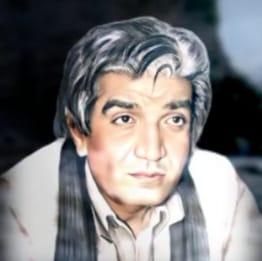

“Two Sufis, One Truth”
Ibn-e- Arabi and Wasif Ali Wasif are two of the most significant personalities in Sufism, whose teachings are quite similar despite their geographical and temporal distance from one another. The following is a comparison of the two scholars about their thoughts about self-awareness and spiritual journey.
Similarities: Spiritual Advancement: Both Ibn-e- Arabi and Wasif Ali Wasif emphasized spiritual advancement and self-sanctification in their advices. They thought that human soul has the potential to achieve higher levels of awareness and unite with Allah. They drew heavily from their spiritual experiences in their works and maintained the existence of direct experience (dhawq) over intellectual understanding. Love (ishq) and devotion (muḥabba) are key concepts of Ibn-e- Arabi and Wasif Ali Wasif as love is considered a way of purifying the soul and getting closer to the Creator.
Era and Geographical Context: Ibn-e- Arabi lived from 1165 to 1240 CE and was born in Muslim Spain, while Wasif Ali Wasif was a poet and a writer based in Pakistan, 1929-1993 CE. Their historical background and geographical location had a notable impact on their philosophy and teachings. For example, Ibn Arabi dealt with the topics of Islamic philosophy and theology while assisting people along their spiritual path, while Wasif Ali Wasif tried to address the modern spiritual problems and questions of contemporary people.
Philosophical Focus: Ibn -e-Arabi’s works are distinguished by the complex metaphysical doctrine he developed, specifically his idea of Wahdat al-Wujud (Unity of Being), meaning that all of the existing things belong to one reality. On the other hand, Wasif Ali Wasif preferred exploring the emotional and spiritual aspects of Sufism rather than providing the theoretical basis for Sufism teachings.
Approach to Self-Awareness: Ibn-e- Arabi talked of the ego being destroyed (fana) and attaining the realization of one’s true self (baqa) taking place during the process of spiritual growth. Wasif Ali Wasif, in his turn, also introduced the concepts of self-awareness and self-realization, although he mainly focused on the ability of an individual to notice and realize his/her inner powers and the ability of love to chan Self-Awareness Concept of Ibn -e-Arabi: The approach of Ibn-e- Arabi to the concept of self-awareness is based on his philosophical beliefs. Self-awareness is believed to be knowing who one really is in God’s reflection. Self-awareness happens when the individual transcends his ego and understands his oneness with God.
Self-Awareness Concept of Wasif Ali Wasif: According to Wasif Ali Wasif, self-awareness is a tool for achieving spiritual development. He regards the self as an instrument for divine love, and it is crucial to have knowledge of one’s potential and weaknesses while progressing on the path of spiritual development.ge the world.
Ibn Arabi: Ibn Arabi’s spirituality was characterized by travels and writings including Fusūs al-Hikam and Al-Futūhāt al-Makkiyya. He began his Sufi career with his mentor Shaykh Abu Abdallah al-Muwallah, whose role was important in shaping Ibn Arabi’s ideas and philosophy.
Wasif Ali Wasif: The spirituality of Wasif Ali Wasif was shaped by his interactions with different Sufi orders and his zeal for literature. He was a popular writer and poet, and his books such as Qeemat-e-Harf and Dil ki Dunya explored various themes regarding spirituality.
Learning about Ibn Arabi: The doctrines of Ibn Arabi can be characterized as comparatively complicated, involving the reality of being, the world and universe, and the soul. Ibn Arabi’s idea of Wahdat al-Wujud was introduced into Islamic belief and philosophy for the first time. Learning about Wasif Ali Wasif: The main idea presented by Wasif Ali Wasif is centered on the idea of spiritual aspects of Sufism. He elaborated on the topic of love and the necessity of spiritual guidance on the journey. To sum up, Ibn Arabi and Wasif Ali Wasif share many similarities in their focus on spiritual development and love as they explain the self-awareness and its research process, though their approaches and backgrounds are different.
Wisdom of Sufism
Ibn Arabi:
“Universe is a unit and its existence is the manifestation of the unit.”
Wasif Ali Wasif:
“The heart as a mirror of the soul and love is the key to open it.”