
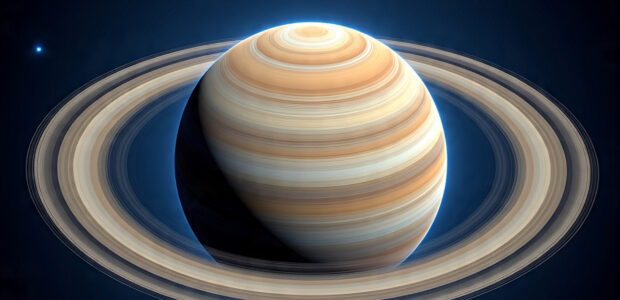

Saturn, the sixth planet in our solar system, has always fascinated us with its stunning rings. But what if there’s more to Saturn than meets the eye? Could there be life on its moons, trapped by the rings and waiting to be discovered?
Saturn’s moons, like Enceladus and Titan, have conditions that could support life. Enceladus has a subsurface ocean with organic compounds, which are the building blocks of life. Titan, on the other hand, has lakes of liquid methane, a stark contrast to Earth’s water-based environment. These discoveries have sparked interest in the possibility of life on Saturn’s moons, with scientists exploring the potential for microbial life on Enceladus and exotic life forms on Titan.
The rings of Saturn might be more than just a natural wonder. Could they be a barrier, protecting or confining life within the Saturnian system? The rings are made up of ice and rock particles, stretching over 170,000 miles in diameter. This vast structure could potentially shield life on the moons from harm, or trap it, preventing it from escaping.
As we explore Saturn and its moons, we may uncover secrets about the universe and our place in it. The possibility of life on Saturn’s moons challenges our understanding of life and its origins. It raises questions about the possibility of panspermia, the idea that life can spread from one planet to another.
NASA’s Cassini mission has provided valuable insights into Saturn’s system, revealing the complexity and beauty of the ringed planet. Future missions, like the Europa Clipper, may help us better understand the potential for life in our solar system.
The search for life beyond Earth is an ongoing quest, and Saturn’s moons are an exciting frontier. As we continue to explore, we may finally uncover the secrets of the ringed planet and our place in the univese.