
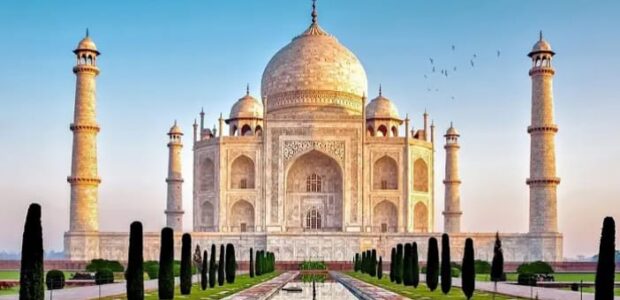

The Taj Mahal, a breathtaking monument in Agra, India, is a testament to the power of love and the artistic prowess of the Mughal Empire. Built by Emperor Shah Jahan in memory of his beloved wife, Mumtaz Mahal, this stunning mausoleum embodies the essence of eternal love and Mughal architectural excellence.
Aspects of Beauty:
- Symmetry and Proportion: The Taj Mahal’s perfect proportions and symmetrical design create a sense of harmony and balance, reflecting the Mughal emphasis on geometric precision.
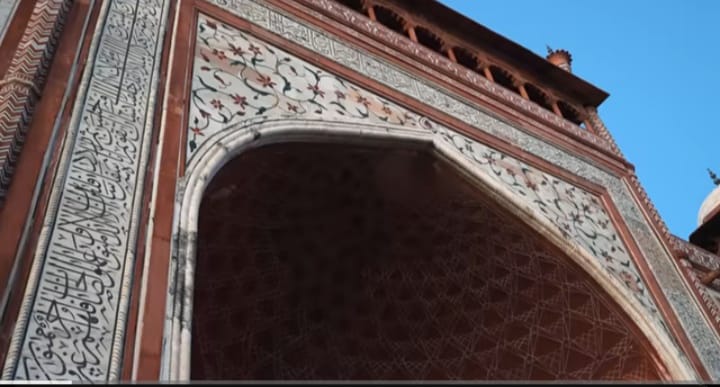
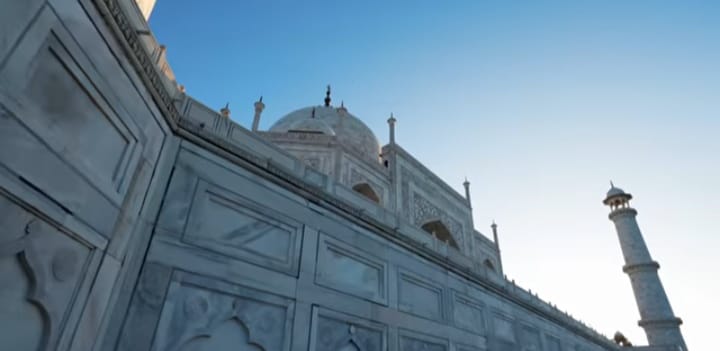
- Marble and Pietra Dura: The intricate marble work and pietra dura (inlaid stone) decorations showcase the Mughal mastery of materials and craftsmanship, adding to the monument’s ethereal beauty.
- Calligraphy and Inscriptions: The beautiful calligraphy and inscriptions on the walls and ceilings demonstrate the Mughal love for Arabic script and poetry, infusing the monument with spiritual and literary significance.
- Charbagh Gardens: The surrounding charbagh gardens, divided into four quadrants, represent the Mughal concept of paradise on earth, providing a serene and contemplative atmosphere.
Mughal Artistic Excellence:
- Blending of Styles: The Taj Mahal’s design combines Indian, Persian, and Islamic influences, reflecting the Mughal Empire’s cultural diversity and artistic eclecticism.
- Innovative Use of Materials: The Mughal’s innovative use of materials, such as marble and red sandstone, created a new aesthetic language that redefined Indian architecture.
- Attention to Detail: The intricate details and ornamentation throughout the monument demonstrate the Mughal obsession with perfection and beauty.
- Spiritual Significance: The Taj Mahal’s design and layout incorporate spiritual elements, such as the use of symbolic colours and geometric patterns, reflecting the Mughal emphasis on spirituality and mysticism.
Conclusion:
The Taj Mahal stands as a testament to the trans formative power of love and the artistic genius of the Mughal Empire. Its beauty and significance continue to inspire wonder and awe, reminding us of the importance of creativity, craftsmanship, and devotion. As we marvel at this iconic monument, let us appreciate the enduring legacy of Mughal art and architecture.