
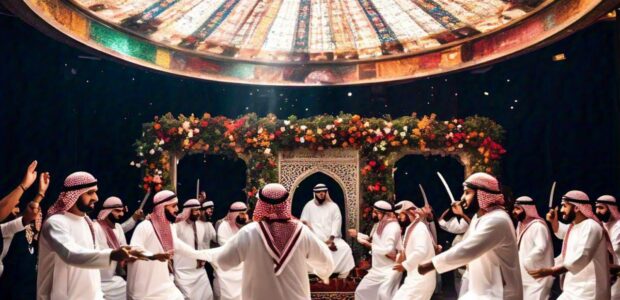

In the rich cultural heritage of the Arab world, traditional dances play a significant role in celebrations and festivities. One of the most iconic and awe-inspiring dances is the Arabic sword dance, also known as “Raks al-Saif” or “Dance of the Sword”. This ancient tradition has been a staple at weddings and other joyous occasions for centuries, and its significance and beauty continue to captivate audiences to this day.
The Origins of the Arabic Sword Dance
The origins of the Arabic sword dance date back to the ancient Middle East, where swords were a symbol of strength, courage, and honour. The dance is believed to have originated in the Arabian Peninsula, where it was performed by warriors and tribesmen as a display of martial prowess and bravery. Over time, the dance evolved and became an integral part of Arabic cultural heritage, with its own unique style, music, and choreography.
The Dance
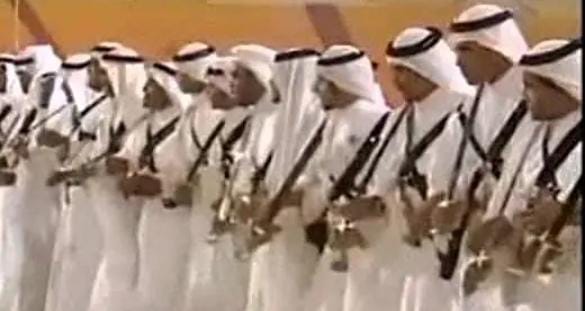
The Arabic sword dance is a mesmerizing display of agility, strength, and coordination. The dancer, typically a man, performs a series of intricate steps and movements while wielding a sword, often accompanied by traditional Arabic music and percussion. The dance is characterized by its dynamic energy, with the dancer spinning, leaping, and twirling to the rhythm of the music.
The Significance of the Sword Dance at Weddings
At weddings, the Arabic sword dance is a cherished tradition that holds deep cultural and symbolic significance. The dance is often performed by the groom or a close family member, and is meant to showcase the groom’s strength, courage, and martial prowess. The sword dance is also believed to ward off evil spirits and bring good luck to the newlyweds.
The Modern Twist
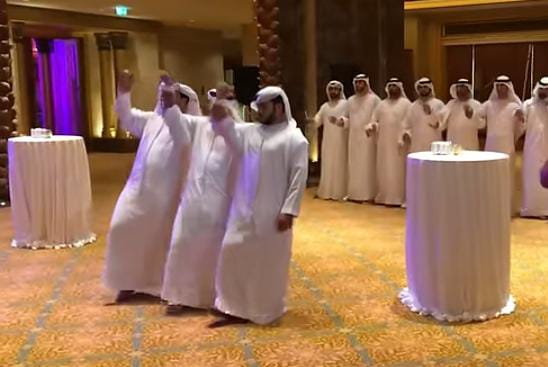
While the traditional Arabic sword dance remains an integral part of Arabic cultural heritage, modern adaptations and fusions have emerged in recent years. Contemporary dancers have incorporated new styles, music, and choreography into the traditional dance, creating a unique blend of old and new. This modern twist has helped to introduce the Arabic sword dance to new audiences and generations, ensuring its continued relevance and popularity.
Conclusion
The Arabic sword dance is a breathtaking and captivating tradition that continues to thrill audiences at weddings and other celebrations. Its rich cultural heritage, intricate choreography, and symbolic significance make it a truly unique and unforgettable experience. Whether performed in its traditional or modern form, the Arabic sword dance remains an integral part of Arabic cultural identity and a cherished tradition that will continue to inspire and delight for generations to come.